
In this article, we will introduce Fumio Sasaki’s book, “Goodbye, Things.”
This book is a minimalist guide that has changed the lives of many readers. Remarkably, it is a bestseller that has been translated into 23 countries, with a total worldwide circulation of 400,000 copies.
As someone whose life was transformed after reading this book, I am eager to convey its charm with all my might.
This article is recommended for individuals who:
- Constantly struggle with never-ending desires for material possessions.
- Wish to live in a neatly organized space but are unsure how to go about decluttering.
Author Fumio Sasaki’s Biography
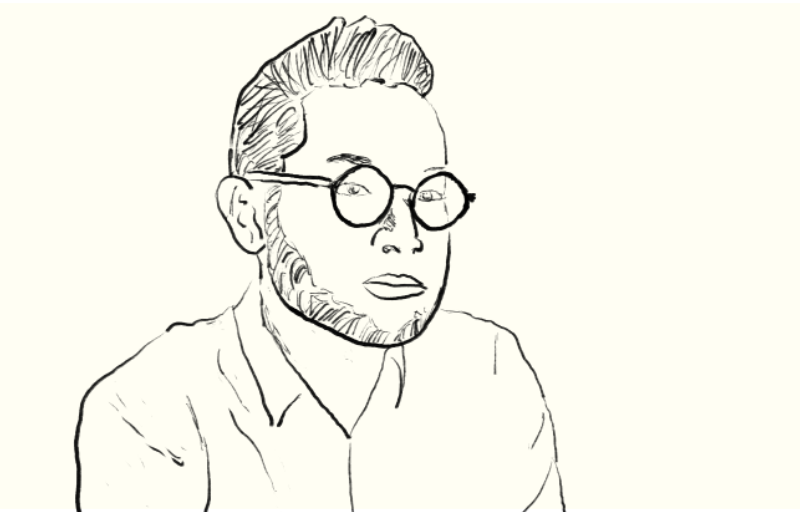
The career of Fumio Sasaki
Born in 1979, Fumio Sasaki is a native of Kagawa Prefecture.
His profession includes being a writer and editor.
He graduated from Waseda University’s department of education and later became independent after working at three different publishing companies.
In 2014, along with Creative Director Naoki Numahata, he established the website “Minimal & Ism,” dedicated to discussing minimalism.
In 2015, his first book, “Goodbye, Things,” was translated into 25 languages and became a worldwide bestseller with a total of 600,000 copies sold.
In 2018, his book on habits, titled “Hello, Habits: A Minimalist’s Guide to a Better Life,” was translated into 12 languages and surpassed 200,000 copies sold worldwide.
Interview video in 2016
This interview from next year after the release of “Goodbye, Things.”
We can see his room when he living Tokyo.
Interview video in 2019
This interview in when he live in Kyoto.He moved to Kyoto after he lived Tokyo.
We can see his room when he living Kyoto.
Learning from Fumio Sasaki: Exploring the Contents of ‘Goodbye, Things
Now, let’s introduce an analysis of ‘Goodbye, Things.’
Simply writing a summary may not leave a lasting impression. Therefore, we will present the content in the form of a conversation with Fumio Sasaki.
The conversational partner is set as this blog author (Ichi) before reading ‘Goodbye, Things.
For some of you, this may be the first time encountering the content of this book. To align the level of prior knowledge, we have set the author as they were before reading the book.
Now, let’s dive into the dialogue
 Ichi
IchiHello. I’m Ichi. Nice to meet you today.
 Fumio Sasaki
Hello, I’m Fumio Sasaki. Nice to meet you too.
Well, I’d like to introduce the content of the book I wrote. But first, let me ask you a question.
Ichi, do you believe that you can be happy once you obtain the things you desire?
IchiCertainly! That’s why I work and earn money.
Fumio SasakiI see.
By the way, have you ever thought about why having possessions makes people feel happy?
IchiWell, if there are many nice things in the room, wouldn’t that make you happy? Fumio, don’t you think so?
Fumio SasakiCurrently, I don’t feel that way.
This is the first point, but having things doesn’t necessarily make people happy.
IchiOh, really?
Fumio SasakiBy the way, after you buy something they desire, do you ever feel the need for something even better after a while?
IchiCertainly, I’ve had that experience. Actually, I’ve had it many times.
For example, I’ve ended up buying numerous pairs of sneakers.
No matter how many I buy, I just keep wanting new sneakers. It’s strange why I can’t seem to be satisfied.
Fumio SasakiThat’s right!
People don’t necessarily become happy just because they acquire things.
Even after buying something, people often find themselves wanting something new.
IchiIndeed, it’s curious. Why do you think that is?
Fumio SasakiActually, we are too caught up in the belief that having things equals happiness. I’ll explain the reasons for that later.
People are overloading with stuff and information
Fumio SasakiLet’s start by discussing how people are overloading with stuff and information.
In the modern era, smartphones allow us to instantly access a wealth of information.
Additionally, with online shopping, we can compare various options and purchase our favorite items.
In fact, the amount of information a person receives in a day today is equivalent to the amount of information a person living 200 years ago would receive in an entire year.
IchiIt’s become a convenient era, hasn’t it?
Fumio SasakiCertainly, it’s convenient, but there are significant issues.
The quantity of modern items and information is too heavy for human hardware.
IchiHmm, what do you mean?
Fumio SasakiFirst, let’s consider the modern hardware. Smartphones and computers see new models released regularly. With each upgrade, their processing power, capacity, and capabilities increase.
However, what about humans? A person born this year doesn’t have higher processing power or memory than someone born last year, right?
In other words, although about 50,000 years have passed since humans first appeared, our abilities haven’t changed significantly. Humans are operating on ancient hardware.
IchiTrue..
Fumio SasakiThe hardware and memory installed in humans remain the same as they were 50,000 years ago. Our capabilities haven’t evolved much since the time when the world had much less information.
Consider this what happens if you overload an old computer with too much data?
IchiIt becomes slow and freezes, right?
Fumio SasakiExactly. It’s the same for humans. The same thing is happening to modern people.
We are constantly exposed to an unimaginable amount of information and things. Due to the accumulation of unnecessary information and belongings, our memory and hard disk are reaching their limits, almost freezing. Of course, essential tasks become difficult.
Moreover, humans don’t have the luxury of getting a new model like cell phones or computers.
How do you think we can manage such heavy hardware?
IchiWhat about reducing unnecessary data inside?
Fumio SasakiExactly. To live comfortably, humans have no choice but to reduce information and belongings to become more agile.
We have everything we want
Fumio SasakiLet’s talk about the concept of owning things from here.
Ichi, is there something you want right now?
IchiOf course!
Recently, I’ve been wanting an iPad mini. I already have a larger-sized iPad, but it’s a bit too big for me, so I’d like a smaller one.
Fumio SasakiRight, not just Ichi, but everyone tends to desire something, wanting something better or newer.
But the truth is, we already have everything we want.
IchiNo way! I haven’t gotten the new iPad yet. And if I’m being honest, I’d like to live in a larger house and decorate the rooms with stylish interiors.
Fumio SasakiActually, it’s not like that. What you have, Ichi, are the things that past Ichi desired.
For example, the room you currently live in – didn’t you visit a few houses and choose the one you wanted to live in?
Even the interior in your room, you selected items from a variety of options because you thought they were what you wanted, right?
IchiCome to think of it, that’s true…
Fumio SasakiExactly. The things you own are what past you wanted.
You wouldn’t buy or sign up for things you thought you didn’t need in the first place.
IchiI see. The things I own were what I wanted in the past.
Fumio SasakiPeople often get downcast, thinking they’re unhappy because they can’t obtain what they want or because their ideal self is distant.
But I want you to remember. Ichi, when you signed the contract for your current home, you must have been delighted to find a well-laid-out space and a room you liked. Even when choosing furniture, you probably felt excited to buy something you found appealing.
IchiYou’re right! I remember being happy when I found this current apartment.
So why do people sometimes feel like they have nothing or desire something better?
Fumio SasakiThat’s a good question!
It’s indeed a mysterious thing. Now, let’s think about the reasons people want things.
People desire things because boredom sets in
Fumio SasakiTo put it bluntly, we desire things because we gradually get accustomed to fulfilled wishes.
As a result of this familiarity, having those things becomes ordinary.
Ichi, you signed a contract for a room you liked, right?
But over time, didn’t you start to get a bit bored living there?
IchiExactly. Over time, the appreciation for living in a new room started to fade.
Fumio SasakiThat’s because your room became routine for you, Ichi, and eventually, you felt like you were bored with this room.
IchiI see, this applies not just to rooms but to everything a person owns.
Fumio SasakiExactly. Humans inherently perceive differences as stimuli.
For instance, imagine the first time you placed a sofa in your room.
At that moment, the environment changed from not having a sofa to having one. Due to this stimulus, people feel happy.
However, as time passes after buying the sofa, you get used to the sight of the sofa, and the sense of difference diminishes.
Then, a new desire for a better sofa emerges. In other words, owning a new sofa from your current one creates a difference, and that’s why you want it.
IchiI see.
So, every time the difference disappears, we find ourselves wanting something new.
Fumio SasakiExactly. Through the endless loop of buying, getting accustomed, getting bored, and buying again, people continue to accumulate things. It’s to create a difference within ourselves. We keep acquiring things because we can’t be satisfied.
IchiHmm, that makes a lot of sense based on my experiences.
Fumio SasakiAnd there’s another reason why people desire things. Let’s talk about that from now on.
Buying Things to Feel One’s Own Value
Fumio SasakiAnother reason is to feel one’s own value.
This is because people appeal to themselves that they have value through the things they own.
For example, wearing a custom-tailored suit that fits perfectly, carrying a polished bag and shoes, and having an expensive-looking watch can easily convey to others that one is competent and earns a high income. Indeed, merely through the possessions one has, a strong appeal can be made.
IchiCertainly, having Apple products can give off a smart impression, and a room filled with books can portray diligence.
Fumio SasakiExactly. Everyone is trying to convey their own value by owning things.
IchiI’ve also made purchases with similar feelings.
By the way, why do you think people engage in this behaviour?
Fumio SasakiIt’s to gain recognition from others for their own value.
Because one cannot independently recognize their own value, it’s only through receiving praise from others that they can acknowledge their worth. For instance, being relied upon by colleagues at work or being told by someone of the opposite sex that you’re attractive—don’t you feel a sense of value in those moments?
IchiCertainly, receiving recognition from others brings a great sense of satisfaction.
Fumio SasakiThrough being evaluated by others in this way, if one doesn’t feel they have value, they can’t go on living. That’s why modern individuals use the things they wear or own to appeal to their own value. They want to be perceived as more competent, so they wear better suits, or they want to be seen as trend-savvy, so they buy new products every time they’re released.
IchiReflecting on my own past, I’ve had such periods. Placing stylish art objects or adding potted plants to my room, trying to convey that I am a stylish individual.
Fumio SasakiExactly, it’s a good example of using things to communicate one’s own value.
By using things as a means to communicate one’s value rather than their functionality, it’s no wonder possessions keep accumulating.
Continuing to Accumulate Things Makes You a Slave to Possessions
Fumio SasakiLet’s move on to the next topic.
The discussion is about becoming a slave to possessions when you keep accumulating things.
Earlier, we talked about how possessions serve as a means to showcase one’s value. Indeed, by having things, you can quickly appeal to yourself, saying, ‘Look, I have this value.’ It’s a very straightforward way to make an impression.
Certainly, that’s true. But by constantly desiring more and more things, possessions will eventually start taking things away from you.
IchiOh, really!?
Fumio SasakiFor instance, let’s say you want to be recognized for having better taste and decide to move to a nicer house. Then, you need to earn more money to buy new interiors. This will consume your time and energy. While wearing down various things, you end up continuously buying more. What was supposed to be a tool to showcase your value with things turns into a master-slave relationship, and eventually, you become a slave to possessions.
IchiWithout realizing it, we start sacrificing ourself to collect things.
Fumio SasakiExactly. If you put too much emphasis on showcasing your value with things, eventually, we will be robbed of essential elements like time and energy.
In other words, a life of continually acquiring things not only fails to bring us happiness but makes us unhappy.
IchiThat’s tragic.
Fumio SasakiTo avoid that, it’s crucial to start by getting rid of accumulated possessions and taking a step back from things. This allows you to reassess your thoughts.
If you discard things, you stop comparing yourself to others
Fumio SasakiNow, let me explain about not comparing oneself to others when you discard things. Comparing oneself to others is a simple way to make people unhappy. Humans tend to compare the things they have with others. It could be thinking, ‘My watch is cheaper than theirs,’ or ‘I don’t live in a better house than that person.’ Things are easy to compare among people.
IchiIs it because there are clear metrics like price or performance?
Fumio SasakiExactly. As a result of such comparisons, if one’s possession appears inferior in value, it leads to feelings of inferiority. It makes people feel unhappy, thinking they might not have any value, and they end up wanting better things.
IchiHmm, so it leads to collecting more things again. It’s like an endless loop.
Fumio SasakiLiving in such an infinite hellish cycle must be tough.
IchiDefinitely don’t want that!
Fumio SasakiThere is an easy way to liberate oneself from this act of comparing things: getting rid of possessions.
There’s no need to go through the trouble of comparing what you have with what others have.
My recommendation is to discard things and invest in experiences.
IchiWhat do you mean by investing in experiences?
Fumio SasakiIt could be starting a new hobby, going on a trip, or participating in events—anything, really. Invest in experiences. As I mentioned earlier, people get accustomed to anything they have, but experiences are something you can’t get used to.
For instance, a coat you bought for $1000 may bring initial joy, but over time, you’ll get used to it and eventually get bored.
However, a $1000 trip will be remembered as enjoyable each time you recall it. It never becomes boring as you reminisce.
IchiI see, experiences ensure that happiness continues indefinitely.
Fumio SasakiMoreover, experiences are difficult to compare with others. It’s impossible to compare the enjoyment of your trip to that of a your colleague’s trip.
IchiThat makes sense.
Fumio SasakiBy letting go of things and investing in experiences, you can free yourself from the cramped life of comparing and feeling down.
If you discard things, you can become more light-hearted
Fumio SasakiLet me explain the idea of becoming more unburdened by discarding possessions.
At first, having too many things weighs you down.
Imagine moving to a new place. If you have a lot of belongings, you’ll need a spacious home to accommodate everything. This makes it challenging to choose the next place to live, and the rent will likely increase. Additionally, the preparation for the move becomes a laborious task.
IchiYeah, just the thought of it is unpleasant…
Fumio SasakiOn the other hand, if you have fewer possessions, it’s no problem to live in a smaller space. You can have more flexibility in your choices. Living in a more affordable home could reduce your expenses, and you might not need to earn as much as you do now. This could give you more freedom in choosing how you work. In other words, it increases the freedom in your life.
IchiIt sounds like it brings more flexibility to various aspects of life.
Fumio SasakiExactly. Your life will have more options, and you’ll experience a sense of freedom and liberation.
If you discard things, you can create happiness through gratitude
Fumio SasakiLet me explain the idea of generating happiness through gratitude by discarding possessions.
When you dispose of items and reduce their quantity, a sense of gratitude towards what you currently have begins to sprout. This is an emotion that you might not feel when you accumulate things in your room and constantly desire new ones.
IchiIt could be because the number of items has reduced to a minimum, allowing you to focus on what you currently have.
Fumio SasakiExactly. Earlier, I mentioned the human tendency to become bored with the current situation.
IchiThat’s why people are always seeking new things.
Fumio SasakiExactly.
In fact, the act of expressing gratitude prevents you from perceiving what you currently have as mundane and uninteresting. Through gratitude, you can appreciate things you’ve grown tired of, making you realize that they are not something to be taken for granted. Having a room allows you to withstand rain and wind. Having a bed lets you sleep comfortably tonight. These awarenesses tend to be gradually forgotten, but expressing gratitude helps you recall the fresh sensation. This feeling of gratitude becomes the difference. Hence, there’s no need to keep buying new things to create that difference.
IchiBy returning to a fresh perspective, you can create that difference.
Fumio SasakiFurthermore, psychological experiments have proven that the more frequently you express gratitude, the happier you are. So, by reducing possessions and cultivating gratitude, not only do you decrease material desires, but you also directly increase your happiness. If that happens, there’s no need to have more possessions than necessary.
IchiUntil now, I’ve been living a life where shopping was a natural part of following material desires. I want to use this opportunity to live with gratitude.
Fumio SasakiExactly. In a life overflowing with possessions, humans tend to lose sight of what truly matters. If you declutter your room and live with gratitude for what you have, your overall life satisfaction is bound to increase.
IchiI’ll start by organizing my room. Thank you so much for the valuable conversation today!”
Afterword
From here on, I will share my reflections based on my personal experiences.
The information presented in this article can be helpful in realizing what is truly important to you.
When deciding whether to discard or keep something, you will find yourself questioning.
Why do I want to keep this item in the future?
Why has this item become unnecessary?
The answers to these questions likely relate to the values and goals that you want to prioritize in the future.
For example, in my case, I discovered a value for enjoying challenges.
This is because the items needed for new challenges are something I want to keep in the future.
For instance, the equipment required for playing basketball, a sport I started at the relatively late age of 18. Initially, I found myself competing against players much more skilled than me, which was a challenge and, despite the difficulties, an enjoyable one.
Similarly, books and tools used for consulting work were essential. I am not inherently intelligent; I have never ranked at the top of my class, and the university I attended is not considered prestigious. However, when I began my career, I was able to join a consulting company, allowing me to work with individuals much smarter than me. Given that I am not a naturally intelligent person, working with these smart individuals led to many frustrating moments. Although this challenge was tough, it was enjoyable for me.
Likely, for all of you as well, practicing the content of this book will serve as an opportunity to reevaluate what is essential to you.
In the actual book, there is much more content that I couldn’t cover in this article. If you found this article intriguing, I recommend giving the book a thorough read.
If you enjoyed this article, I would be delighted if you could follow the social media accounts liIf you have any questions, feel free to send me a DM or leave a comment.
Sayonara