
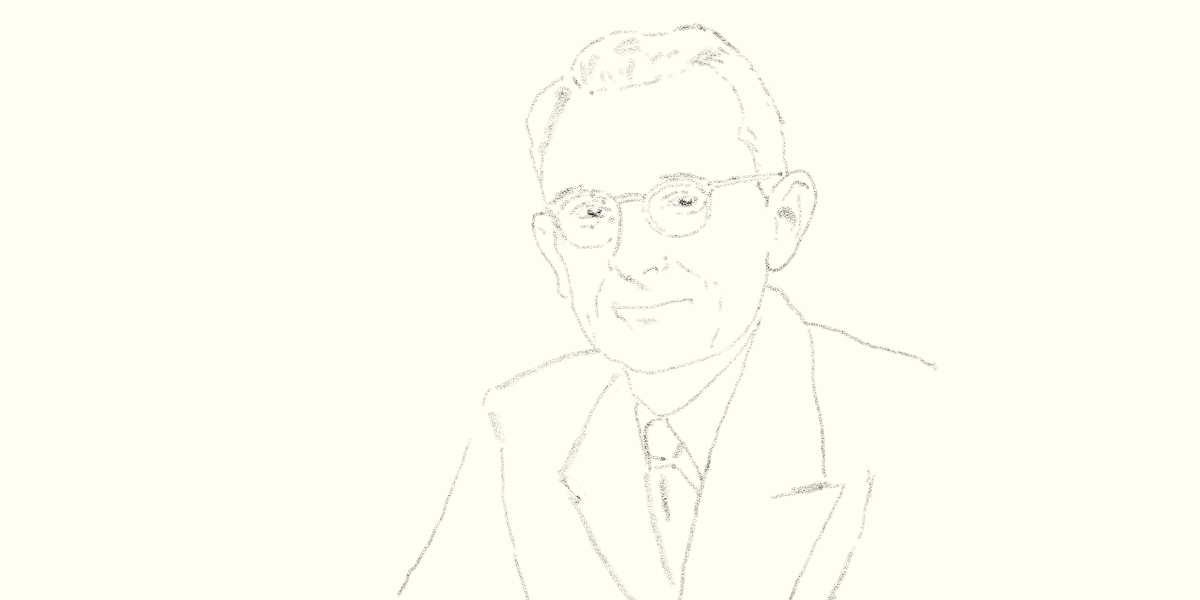
Today I’d like to share what I learned from reading Dale Carnegie’s classic, How to Win Friends and Influence People.
It’s one of the world’s best-selling self-help books and is often described as the “textbook of human relationships.”
But after finishing it, I came away with a slightly different impression.
This isn’t a book about how to make people like you.
It’s a book about how to influence people.
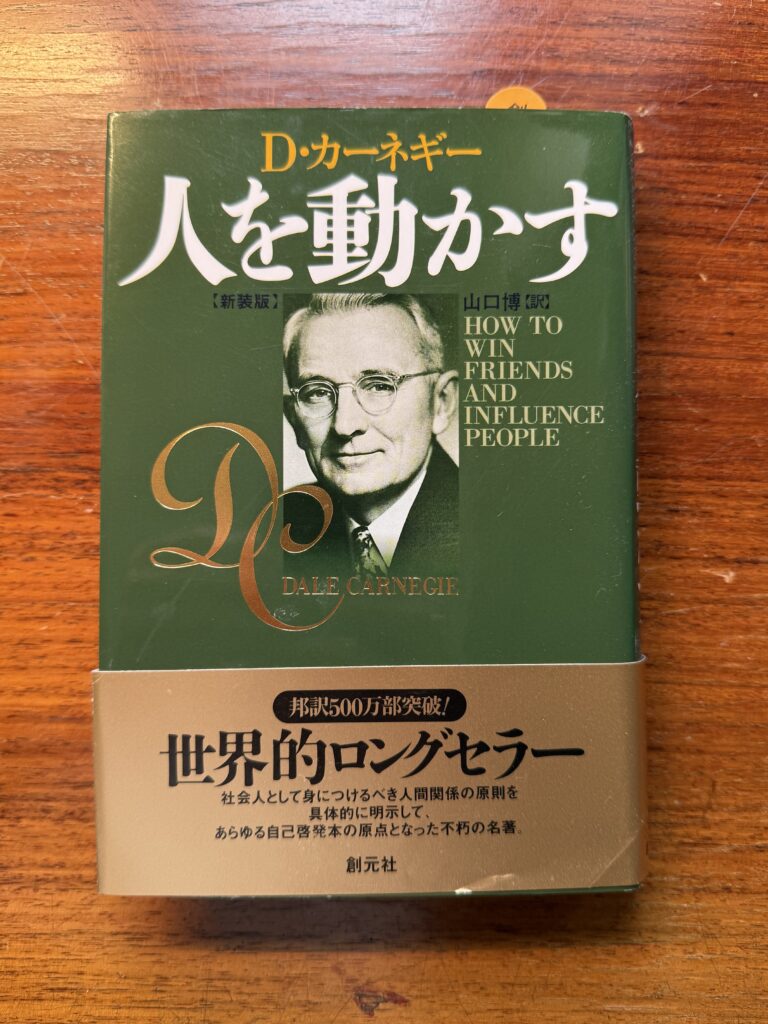
Of course, Carnegie isn’t telling readers to deceive or manipulate others.
If anything, he repeatedly emphasizes sincerity and genuine interest in other people.
Even so, I couldn’t help feeling that the techniques in this book can be used for both good and bad.
So in this review, I’d like to look at this book from a slightly different perspective.
People Are Moved by Emotion, Not Logic
One idea stood out to me more than anything else while reading this book.
People are moved by emotion, not logic.
No matter how correct your argument is, it doesn’t mean people will act on it.
But when someone genuinely wants to do something, they’ll often act surprisingly naturally.
So what makes someone want to act?
This book answers that question through countless real-life examples.
And to me, they all seemed to revolve around one basic human desire:
the desire to be recognized.
No One Can Escape the Need for Recognition
There’s one human desire that can’t be satisfied alone.
The desire for recognition.
No matter how successful or wealthy someone becomes, they still want to be acknowledged by others.
History is full of examples.
Many billionaires donate their fortunes and build museums, universities, or hospitals that carry their names.
Part of that is undoubtedly to give back to society.
But I also think there’s another reason.
The desire to leave behind proof that they existed.
To be remembered.
To be recognized.
The desire to be promoted.
To be respected.
To be treated as someone important.
All of these can be seen as expressions of the same need for recognition.
And this isn’t something only famous or successful people experience.
We all act on this desire every day.
You post a photo on Instagram and find yourself checking how many likes it gets.
You upload a video to YouTube and keep refreshing to see if anyone has left a comment.
Your manager says,
“Thanks. That really helped.”
Just hearing those few words can make your entire day better.
On the other hand, if you work hard and no one acknowledges it, you may start wondering,
“Did anyone even notice?”
I’ve felt that way myself.
When you think about it, the desire for recognition isn’t unusual at all.
It’s simply part of being human.
And it has one important characteristic.
It can’t be fulfilled alone.
No matter how many times you tell yourself,
“I’m amazing.”
it never feels quite enough.
Only when someone else recognizes you does that need truly feel satisfied.
And that’s where the key to influencing people lies.
Satisfy the Need for Recognition, and People Will Move
This book repeatedly teaches ideas like these:
- Don’t criticize people.
- Give sincere praise.
- Make others feel important.
- See things from the other person’s perspective.
At first glance, it simply sounds like advice on becoming a kinder person.
But I came to see it differently.
What all of these ideas have in common is that they satisfy another person’s need for recognition.
People naturally like those who acknowledge them.
When someone treats us as if we matter, we’re much more willing to listen to them.
In other words, the techniques in this book satisfy another person’s need for recognition—and as a result, inspire them to act.
There’s nothing inherently wrong with that.
Whether you’re in sales, customer service, or management, showing respect for others is essential.
That’s probably one reason this book has remained a bestseller for nearly a century.
At the same time, though, I found it a little unsettling.
What if these same techniques were used only for personal gain instead of helping others?
Praising people.
Making them feel important.
Pretending to understand what they want.
All of these can also become tools for controlling people.
And while reading this book, one particular movie scene kept coming to mind.
Why I Think It’s a “Dark Side Skill”
In Star Wars, Emperor Palpatine leads Anakin Skywalker to the dark side.
He doesn’t threaten him.
He doesn’t give him orders.
Instead, he listens to Anakin’s fears.
He recognizes his talent.
He encourages him, saying,
“You can do it.”
Little by little, he leads Anakin to choose that path on his own.
While reading How to Win Friends and Influence People, I kept thinking about that scene.
Of course, I’m not saying Carnegie encourages people to deceive or manipulate others.
In fact, it’s quite the opposite.
He repeatedly emphasizes sincerity and respect for others.
Even so, the techniques in this book can be used for both good and evil.
Just as a knife can be used for cooking or for committing a crime, a skill itself is neither good nor bad.
Everything depends on the person using it.
That’s why I came to think of this book as teaching a kind of “dark side skill.”
I don’t mean it’s dangerous and shouldn’t be read.
Quite the opposite.
Precisely because these techniques are so powerful, I believe they’re worth understanding.
If you don’t know they exist, you may end up being the one who’s influenced.
If you do know them, you can choose how to use them—and better protect yourself from being influenced by them.
But Should We Use These Techniques on Family and Close Friends?
This is where I started asking myself a different question.
If I truly mastered the techniques in this book, should I use them on my family?
On my closest friends?
Personally, I don’t think so.
Of course, praising people and treating them with respect are wonderful things.
But the moment the goal becomes getting someone to do what you want, something about the relationship begins to change.
Family relationships aren’t sales.
Friendships aren’t negotiations.
Rather than trying to control one another, I want those relationships to be built on respecting each other for who we are.
After finishing this book, my thoughts naturally led me to Adlerian psychology.
If there is a way to influence people, I wondered if there might also be a philosophy that teaches the opposite.
That thought led me back to the books on my shelf about Alfred Adler.
Adlerian Psychology: A Psychology of Healthy Relationships
Adlerian psychology was developed by the Austrian psychiatrist Alfred Adler.
Outside Japan, Adler’s ideas are perhaps best known through books such as The Courage to Be Disliked.
His psychology covers many topics, but at its core is one simple question:
How can people live happy, fulfilling lives?
To answer that question, Adler emphasized ideas such as:
- Don’t compare yourself with others.
- Don’t interfere with other people’s tasks.
- Don’t let your life be ruled by the need for recognition.
If There’s a Dark Side, There Must Also Be a Light Side
From this point on, these are no longer Carnegie’s ideas.
They’re simply my own interpretation after reading both How to Win Friends and Influence People and Adlerian psychology.
I’m not claiming that “Carnegie says this” or “Adler says that.”
This is simply the conclusion I reached after reading both.
One of Adler’s best-known ideas is this:
Don’t become a slave to the need for recognition.
Live your own life instead of living for other people’s approval.
And don’t try to control others through your own judgments of them.
At first glance, this seems almost opposite to Carnegie’s philosophy.
But I don’t think one is right and the other is wrong.
They’re simply approaching human relationships from different directions.
That realization led me to think about the difference between recognition and gratitude.
Recognition and Gratitude Are Similar—but Not the Same
Imagine saying,
“You’re an amazing person.”
That’s recognition.
You’re affirming someone else’s value.
Now compare it with,
“Thank you. Your help meant a lot to me.”
That’s gratitude.
You’re not evaluating the other person.
You’re simply expressing what their actions meant to you.
At first, the two seem very similar.
But their purpose is completely different.
Recognition has the power to move people.
When someone feels recognized, they naturally want to live up to that recognition.
That’s why Carnegie placed so much importance on it.
Gratitude, on the other hand, isn’t about influencing someone.
It’s simply an honest expression of how you feel.
That’s why, in my closest relationships, I’d rather express gratitude than recognition.
Instead of evaluating people, I’d rather say,
“Thank you.”
To me, that feels like a more natural way to respect the people who matter most.
Carnegie for Work. Adler for Life.
Does that mean I disagree with How to Win Friends and Influence People?
Not at all.
In fact, I think it’s a book everyone should read at least once.
Sales.
Job interviews.
Presentations.
Leadership.
Whenever you need to build trust and gain someone’s cooperation in a limited amount of time, Carnegie’s ideas are incredibly practical.
I’m sure I’ll continue using many of them in my professional life.
But I don’t want to approach my family or closest friends through the lens of “how to influence people.”
With the people who will be part of my life for years to come, I’d rather express gratitude than evaluate them.
So my conclusion is surprisingly simple.
Carnegie for work.
Adler for life.
I don’t see these books as opposing philosophies.
To me, they’re like light and shadow—each helping me better understand the other.
Final Thoughts
How to Win Friends and Influence People is often introduced as a book about building better relationships.
But I read it as a book about the mechanics of influencing people.
And those mechanics can be used for both good and bad.
That’s why I came to think of them as a kind of “dark side skill.”
Of course, the skill itself isn’t good or evil.
What matters is how we choose to use it.
That’s why I recommend this book.
Not to manipulate people.
But to better understand what moves people—and to think carefully about who you want to use that knowledge for.
Get How to Win Friends and Influence People
Few books have made me think this deeply about human nature.
How to Win Friends and Influence People isn’t just a book about communication.
It’s a book about understanding why people do what they do.
Whether you use those lessons at work, in leadership, or simply to better understand people, I think it’s a timeless classic worth reading.