If you’re looking for a New Balance insole, the first one I’d recommend trying is the RCP150.
I’ve bought more than 20 of them over the years.
Why so many?
The reason is simple.
They’re cheap.
But this isn’t one of those “you get what you pay for” products.
In fact, the performance you get for the price is surprisingly good.
At some point, I realized that almost every New Balance shoe I own had an RCP150 inside.
Of course, it’s not perfect.
In this review, I’ll share the strengths and weaknesses I’ve discovered after buying more than 20 pairs.
What Is the New Balance RCP150 Insole?
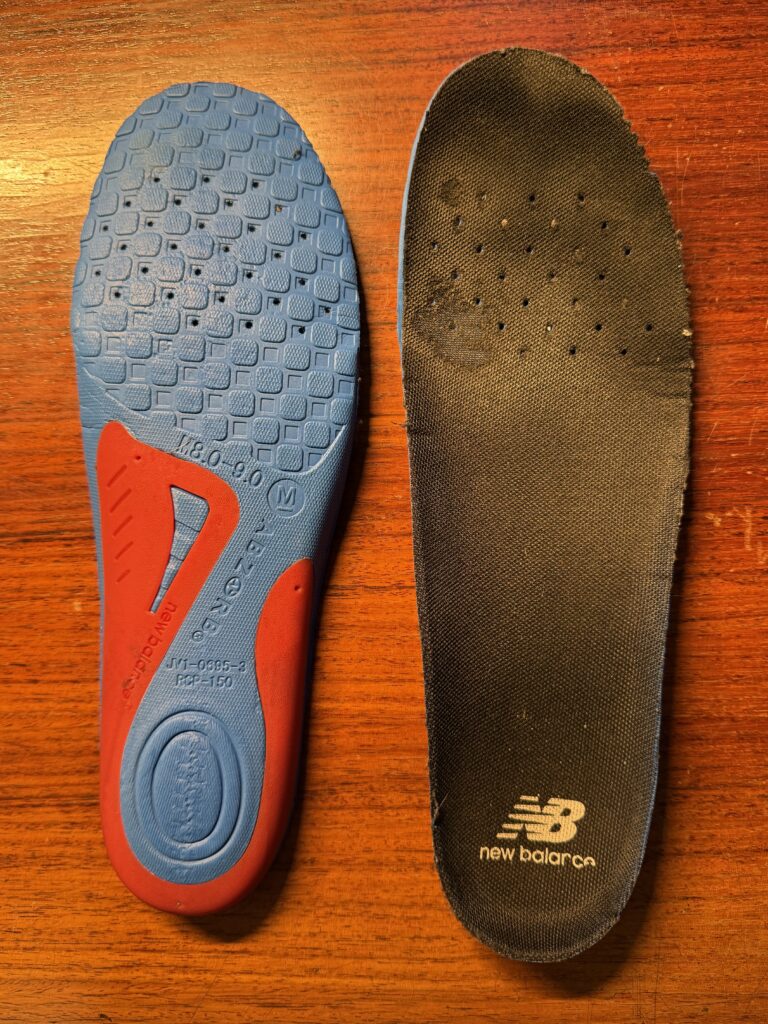
The RCP150 is a replacement insole made by New Balance.
Its purpose is simple:
to improve cushioning and stability compared to the stock insole.
There are two main features that make it stand out.
TPU Stabilizer
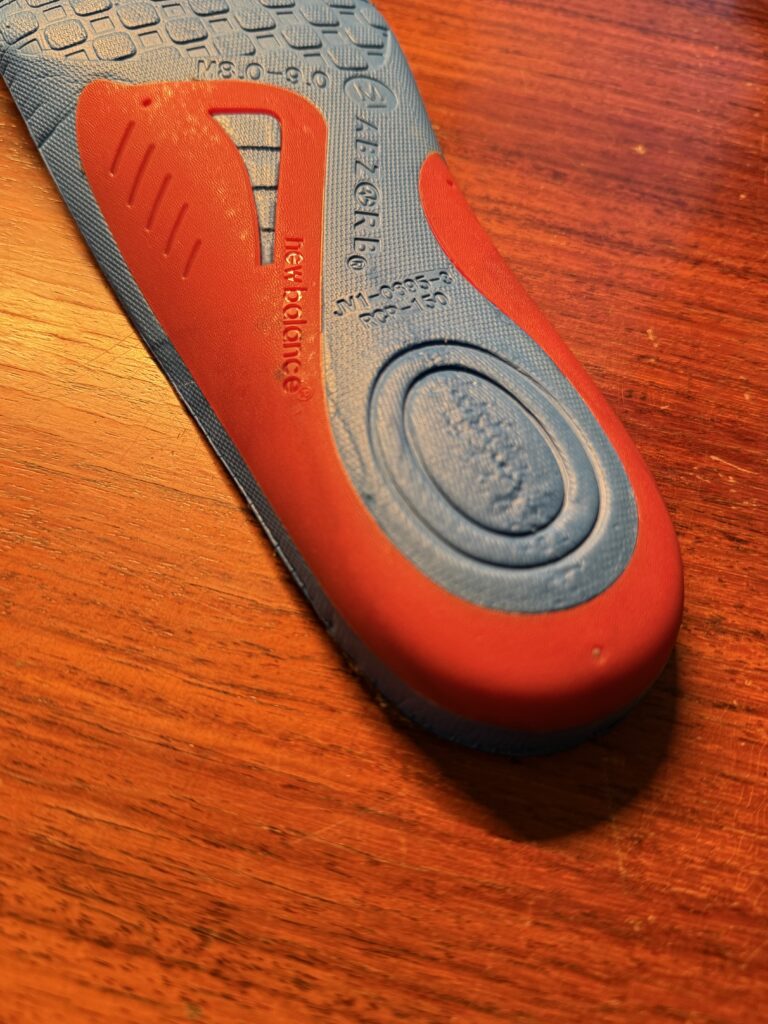
The first is the TPU stabilizer.
It helps support the arch of your foot and prevents excessive movement while walking.
The result is a more stable feel around the heel, especially during long walks or long hours on your feet.
ABZORB Cushioning
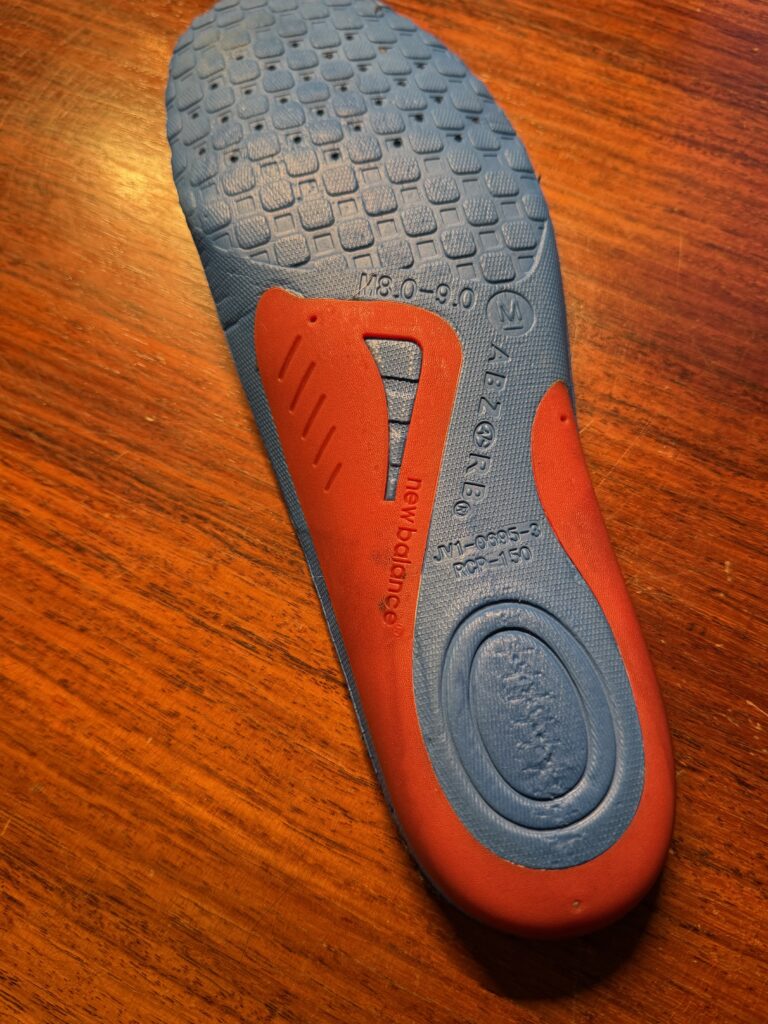
The second feature is ABZORB cushioning.
This is the same impact-absorbing material used in some of New Balance’s higher-end models.
The cushioning runs throughout the insole and helps soften impact with every step.
Together, these features improve both:
- Cushioning
- Stability
without dramatically changing the character of the shoe.
The Biggest Advantage: Value for Money
This is the main reason I’ve continued buying the RCP150.
At around $12 USD, it’s surprisingly affordable.
Most aftermarket insoles cost somewhere between $50 and $80, and some are even more expensive.
Those products may offer additional benefits, but there’s one problem:
Buying enough of them for every pair of shoes gets expensive very quickly.
Eventually, you end up moving the same insole from one pair to another.
The RCP150 avoids that problem.
Because it’s inexpensive, you can simply buy multiple pairs.
That’s exactly what I did.
Today, most of my New Balance shoes use an RCP150.
How It Compares to the Stock Insole
Many New Balance shoes come with OrthoLite insoles.
To be fair, OrthoLite isn’t bad.
It’s lightweight, breathable, and widely used by major footwear brands.
That said, my honest impression is that it’s still basically a piece of foam with slightly better cushioning.
I’ve tried custom insoles that cost more than $200, so I’ve had the opportunity to compare a wide range of options.
From my experience, the stock insole provides basic comfort, but it doesn’t allow the shoe to perform at its full potential.
When I swap in an RCP150, the difference is immediately noticeable.
You can actually feel the additional support under your feet.
If you’re a New Balance enthusiast, you’ll probably notice it too.
What I Like About the RCP150
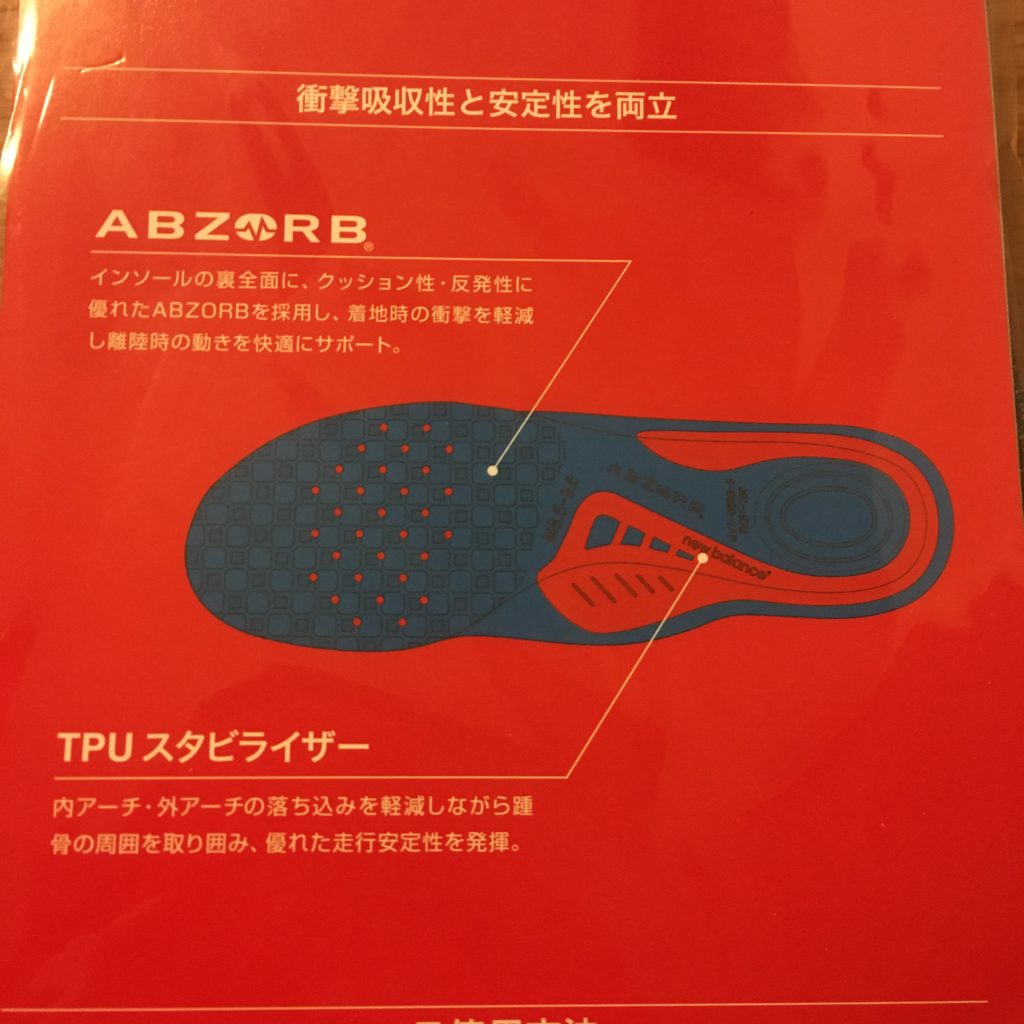
Better Cushioning
The full-length ABZORB cushioning helps reduce impact while walking.
The material is also slightly firmer than the stock insole, which gives the shoe a bit more responsiveness.
Compared to the standard insole, fatigue is noticeably reduced during long walks.
Better Stability
Personally, this is the bigger benefit.
The TPU stabilizer supports the foot and helps keep the heel from moving around unnecessarily.
As a result, your posture feels naturally more stable.
This becomes especially noticeable during long periods of walking or standing.
Outstanding Value
I’ve already mentioned this several times, but it’s worth repeating.
For around $12, you get:
- Improved cushioning
- Improved stability
- Excellent compatibility with New Balance shoes
That’s why I’ve bought more than 20 of them.
If they cost $50 each, I probably wouldn’t own nearly as many.
Things to Keep in Mind
I’ve praised the RCP150 quite a bit so far.
But it does have some drawbacks.
Not Ideal for Firm Shoes
The TPU stabilizer improves stability.
However, it also increases the overall rigidity of the shoe.
That’s usually a good thing, but on shoes that already feel firm, it can be too much.
For example, I found the RCP150 a bit excessive in models such as:
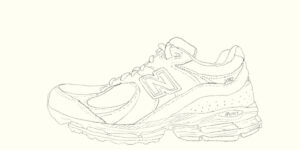
- 2002R
- 998
- 2040
If you’re looking to make a shoe softer, this may not be the best choice.
Only Available in Japan
This is the biggest downside.
The RCP series is a product line developed specifically by New Balance Japan.
As a result, it’s very difficult to find outside Japan.
Oddly enough, you can’t even buy it from New Balance in the United States.
Considering how good it is, that’s a shame.
Fortunately, it’s relatively easy to find within Japan.
Many New Balance stores carry it, and it’s also available through major online retailers.
Some stores even have sample pairs that you can try before buying.
Other RCP Models Are Worth Exploring
The RCP150 is just one model in the RCP lineup.
There are several other options in the series, many of which offer excellent value as well.
The RCP150 happens to be my favorite, but the best choice ultimately depends on your foot shape and personal preference.
If you have the chance to try different models in-store, it’s worth comparing them.
Final Thoughts
The RCP150 is one of the easiest ways to improve the comfort of a New Balance shoe.
The difference isn’t dramatic.
It won’t completely transform the shoe.
But if you’ve ever thought:
“I wish this had a little more stability.”
or
“I wish the cushioning was slightly better.”
the RCP150 solves those problems at a surprisingly low cost.
Its only real weakness is availability.
If you’re ever visiting Japan and happen to come across one, it’s absolutely worth trying.